
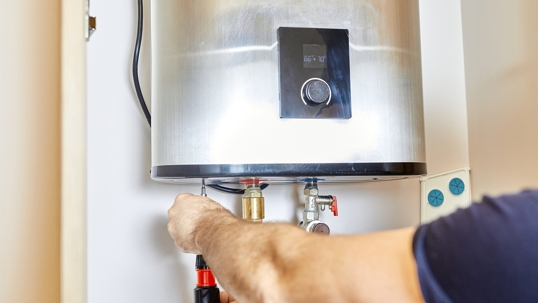
Strange banging or popping from a water heater can make you picture a tank about to burst in the middle of the night. The sound often echoes through walls and ceilings, so it feels bigger than it really is. Many homeowners feel uneasy the first time their quiet water heater suddenly starts making noise.
Noise by itself does not automatically mean your water heater is about to fail, but it does mean something has changed inside the tank or the connected pipes. In a region with hard water like ours, that change is often sediment buildup, scale on heating surfaces, or pressure changes in a closed plumbing system. Understanding what different noises usually mean helps you decide whether this is a simple maintenance issue or a warning sign you should not ignore.
At EZ Flow Plumbing, LLC, we work on water heaters across Gilbert and nearby East Valley communities every day, and noise complaints are one of the most common reasons people contact us. We see clear patterns in how local water conditions, installation choices, and lack of maintenance turn a quiet tank into a rumbling or whistling one. In this guide, we will walk through the most common water heater noise problems, explain what is happening inside the system, and share when you can try basic steps yourself and when it is time to call our licensed team.
Why Water Heaters Start Making Noise
Most new water heaters run quietly. When you start to hear new or louder sounds, it usually means conditions inside the tank or attached piping have changed. In many homes, that change is frequently tied to hard water. Water that carries dissolved minerals, mainly calcium and magnesium, can cause those minerals to drop out of the water when heated and settle inside the tank.
Over time, those minerals form a layer of sediment on the bottom of the tank and can also cling to heating surfaces. On a gas water heater, they sit right above the burner flame. On an electric model, they coat the heating elements. This buildup changes how heat moves into the water and how water flows inside the tank. That is when you start to hear popping, rumbling, or other strange sounds as the heater works harder to push heat through that crusty layer.
Noise can also come from pressure changes and moving metal. As water heats, it expands. If there is not a good path for that extra volume to move into, pressure rises in the tank and the pipes. Valves, fittings, and even the tank shell respond to those changes with whistling, hissing, or creaking. Modern quick-closing faucets and washing machine valves can create sudden stops in water flow that cause loud bangs in the piping when the water’s momentum has nowhere to go.
As a licensed plumbing company, we see the same story play out in many homes. A water heater that has not been flushed in years starts to rumble. Pipes in a newer home without proper expansion control begin knocking. A relief valve starts to hiss. Our goal here is to help you connect the sounds you hear with the likely cause, so you can protect your system and reduce the risk of costly damage.
Rumbling & Popping Noises: Sediment Boiling at the Bottom of the Tank
Rumbling and popping are some of the most common water heater noise problems we see. Homeowners usually describe it as sounding like rocks tumbling in the tank or a pot of boiling water that is working too hard. This is classic sediment behavior, and in hard water conditions, it can show up just a few years after installation if the tank is not flushed.
Here is what is happening inside the tank. With each heating cycle, minerals in the water settle and harden on the bottom of the tank, forming a crusty blanket over the steel surface. When the burner or electric element heats the tank, water trapped in small pockets under that sediment heats faster than the water above. Those trapped pockets can flash into steam, expand quickly, and then fight their way through the sediment layer. Each bubble that breaks through creates a small pop or rumble, and all of them together give you that deep, rolling noise.
This is more than a nuisance. That layer of sediment acts like insulation in the wrong place. Your burner or elements have to run longer and hotter to get the water up to temperature, which can shorten the life of the tank and increase your gas or electric use. The constant flexing from those steam pockets also stresses the metal at the bottom of the tank. In some cases, that stress can contribute to premature leaks or failures, especially in older heaters that have gone years without maintenance.
For some homeowners, a careful flush can quiet a rumbling tank significantly. Flushing means draining water from the bottom of the tank through the drain valve to carry out sediment. In newer tanks with mild buildup, this can work well. In older tanks with heavy sediment, aggressive flushing can clog valves or stir up so much material that it is hard to clear without the right tools. If you hear heavy rumbling, see very cloudy water during draining, or notice the drain valve clogging quickly, it is a good point to have us step in rather than forcing the issue.
We regularly flush and service noisy water heaters through our EZ Flow Maintenance Club, which keeps sediment under control before it hardens into a solid mass. For many homeowners, that routine service means the difference between a quiet, efficient heater and a constant rumble that signals stress on the tank. If your heater has started to sound like a popcorn maker, a professional inspection and flush is usually the next smart move.
Crackling, Sizzling, or Hissing: Moisture on Electric Elements or Condensation
On electric water heaters, a different set of sounds is common. Many homeowners describe a faint crackling, sizzling, or hissing when the heater turns on. This often comes from moisture on the hot electric elements or from light condensation inside the tank. In garages and exterior closets where temperature swings can be significant, a little condensation is not unusual, especially after a fresh fill or after the tank has sat cold.
Electric elements are metal rods that run into the tank and heat the surrounding water when electricity flows through them. When they are hot and a thin film of water or condensation touches them, the moisture flashes to steam and sizzles, similar to drops of water in a hot pan. A brief, light crackle right as the heater starts, especially after a period of no use, can be normal as that moisture burns off.
The situation changes when the sizzling is loud, constant, or paired with other warning signs. For example, if you hear strong crackling every time the heater runs, see water around the base of the tank, or notice the breaker tripping, this could point to a leaking element gasket, corrosion around the element, or other electrical issues. In that case, the sound is a clue that water is reaching parts it should not, or that the element itself is struggling under mineral buildup.
The safest things a homeowner can do are visual and basic. You can look for visible leaks at the element access panels, rust streaks, or moisture around the electrical connections with the power turned off at the breaker. What you should not do is remove wiring or elements yourself unless you are fully trained and comfortable with electrical work. Electric water heaters pull serious current, and improper handling can cause shocks or damage.
Our licensed technicians routinely test elements, replace failed gaskets, and address corrosion on electric water heaters. When a crackling sound is paired with moisture, tripping breakers, or inconsistent hot water, we can safely isolate the problem and recommend repair or replacement. If you are hearing more than an occasional light sizzle, it is worth having us take a closer look.
High-Pitched Whistling or Screeching: Pressure & Valve Problems
Few sounds grab attention like a high-pitched whistling or screeching near the water heater. Homeowners usually compare it to a tea kettle or a small jet engine. This type of noise typically means water or steam is being forced through a tight restriction at high speed. Common culprits include partially closed shutoff valves, clogged inlet screens, or failing valves that no longer open and close smoothly.
From a physics standpoint, the whistling happens when fluid under pressure is squeezed through a narrow opening. As water or steam rushes through that small space, it speeds up and creates vibrations in the surrounding metal and air. Those vibrations produce a clear tone, much like air passing through a whistle. If a plumber recently worked on the heater, or someone in the home turned valves for another repair, a slightly closed or damaged valve can create a whistle the first time the system heats again.
One valve deserves special attention. Every tank-style water heater has a temperature and pressure relief valve, usually on the side or top of the tank, with a discharge pipe running down alongside the tank. This valve is a critical safety device. It is designed to open if pressure or temperature inside the tank climbs beyond safe limits. Occasional, brief releases can happen, especially in systems without good expansion control, but ongoing hissing or whistling at this valve, visible discharge, or water pooling at the end of the pipe is a red flag that should not be ignored.
There are a few safe checks you can make. You can confirm that the cold water shutoff valve feeding the heater is fully open and not stuck half closed. You can listen carefully to locate the source of the whistling. If it is clearly coming from a nearby faucet or a toilet fill valve, the issue may be in that fixture rather than the heater. If, however, the sound is right at the heater or the T&P relief discharge pipe, or you see water escaping there, it is time to involve a professional.
At EZ Flow Plumbing, LLC, we frequently diagnose whistling and screeching water heaters that turn out to have worn valves, missing or undersized expansion tanks, or other pressure control issues. We provide free estimates and transparent pricing for valve replacement or system adjustments, so you know what work is needed before we begin. Whistling may start as just an annoying sound, but because it is often tied to pressure, it is worth getting it checked promptly.
Loud Banging or Knocking: Water Hammer vs. Tank & Pipe Expansion
Loud bangs and knocks are some of the most startling water heater noise problems. Many people contact us after hearing a sharp thud in the walls when a washing machine or dishwasher shuts off, or a series of knocks when hot water starts flowing. These sounds usually come from one of two sources, water hammer in the pipes, or expansion and contraction as hot pipes rub against framing members.
Water hammer happens when moving water stops abruptly. Modern fixtures often have quick-closing valves that shut when a cycle ends or when you close a lever handle quickly. The moving column of water in the pipe suddenly has nowhere to go. Its momentum creates a pressure wave that travels through the pipe, causing it to jump or flex and hit nearby framing or other pipes. Each impact produces a bang that can echo across the house, especially if the pipes are not well supported.
Thermal expansion noises work differently. As hot water from the heater flows into metal pipes, those pipes warm up and grow slightly longer. If they pass tightly through holes in studs or rest against joists, that movement can cause rubbing, ticking, or knocking as the metal slides and then sticks. When the water stops or cools, the pipes contract and can make similar sounds in reverse. These noises are often rhythmic and may show up a minute or two after you start or stop hot water.
Neither water hammer nor normal expansion knocks mean the water heater itself is about to fail, but both can stress the plumbing over time. Persistent hammer can loosen joints, damage valves, or even contribute to ruptured pipes in extreme cases. Constant expansion noise indicates that pipes may not be properly supported or isolated.
There are reliable ways to quiet these problems. For water hammer, we often install hammer arrestors near fast-acting valves like washing machines or dishwashers, or adjust the way lines are supported so they cannot swing freely. For expansion noise, we may add or relocate pipe supports, add cushioning where pipes pass through framing, or adjust how hot water is routed. For systems that lack proper expansion control, adding or tuning an expansion tank can reduce pressure swings that contribute to both hammer and valve noise.
Our technicians arrive in clearly marked vans with the tools to locate the true source of banging and knocking, rather than guessing. We have handled many homes where a short visit to add supports, hammer arrestors, or expansion control made a noticeable difference in noise. If your plumbing sounds like it is coming apart in the walls, we can track down the cause and recommend a practical fix.
Booms, Roars, & Burner Issues in Gas Water Heaters
Gas water heaters come with their own distinct set of sounds. A low, gentle roar when the burner is on is normal. What is not normal is a loud boom or heavy “whoosh” every time the burner lights, or a roaring sound that seems much louder than it used to be. These noises usually mean something has changed in how the burner is igniting or how the flame is burning.
In a typical gas heater, gas flows to a burner and is lit by either a standing pilot or an electronic igniter. The goal is for the gas to light quickly and evenly across the burner ports. If those ports are partially blocked by rust, dust, or other debris, gas can build up in a section of the burner before it finds flame. When it finally lights, a small pocket of accumulated gas ignites at once, producing a noticeable boom or strong “whoomp.” Repeated over time, this can stress components and potentially damage the burner assembly.
Other gas-related noises can come from the flue and vent system. A misaligned or partially blocked vent can create unusual rumbling, roaring, or even a fluttering sound as exhaust struggles to move out of the house. Strong winds can interact with vent terminations and cause fluctuating sounds. In some cases, poor draft can allow combustion products to spill back into the space, which is both a performance and a safety concern.
Because these noises are tied to combustion and exhaust, this is not an area for do-it-yourself experimentation. Taking apart burners, adjusting gas valves, or modifying venting without proper training and instruments can create unsafe conditions. The safest steps you can take are to note when the noises occur, look for signs of soot or scorch marks around the burner area, and confirm that nothing obvious is blocking the vent termination outside.
Our licensed team at EZ Flow Plumbing, LLC routinely inspects and services gas water heaters that are booming or roaring. We clean burners, check ignition systems, verify combustion, and evaluate venting to determine whether the heater can be safely repaired or is nearing the end of its serviceable life. If your gas heater’s ignition has started to sound more like a small explosion than a gentle light, scheduling a professional inspection is an important step.
When Water Heater Noise Becomes an Emergency
Not every noise needs a middle-of-the-night call, but some sounds are clear warning signs that your water heater needs urgent attention. The most serious are noises tied directly to pressure relief, gas leaks, or active leaking from the tank itself. Knowing how to recognize these situations can protect your home and give you clarity about when to act quickly.
A temperature and pressure relief valve that is hissing constantly, spitting water, or discharging enough water to form a steady puddle is a concern that should be addressed quickly. That valve only opens when pressure or temperature inside the tank is higher than it should be, or when the valve itself has failed. Loud whistling or roaring at this valve, especially if your hot water seems hotter than usual, is a sign that the heater is operating outside normal conditions. Similarly, any smell of gas near a gas water heater, scorch marks, or visible charring should be treated as an urgent safety issue.
Water leaking from the body of the tank is another red flag. A slow drip from a drain valve or fitting may be repairable, but water seeping from the shell itself, rust trails down the sides, or a bulging tank wall can indicate internal corrosion and structural weakness. Combined with banging, hissing, or other heavy noises, this is a strong signal that the tank is reaching the end of its serviceable life and could fail more dramatically if left in service.
If you see or hear any of these warning signs, the safest move is to limit exposure and shut things down if you can do so without risk. For gas units, that may mean turning the gas control knob to the off position and closing the gas shutoff valve. For electric units, that means turning off the dedicated breaker. Turning off the cold water supply to the heater can also help reduce pressure. Once those steps are taken, it is time to bring in a professional.
EZ Flow Plumbing, LLC provides same-day service and emergency support for water heater issues. When we arrive on a noisy-heater call, we focus first on stabilizing any active leak or unsafe condition, then we diagnose the root cause and walk you through repair or replacement options with up-front pricing. If your heater is making a sound that makes you nervous and you see any of the warning signs above, contacting us promptly is the right call.
Preventing Future Water Heater Noise With Regular Maintenance
The most reliable way to keep a water heater quiet is to prevent the conditions that cause noise in the first place. In hard water conditions, that means staying ahead of sediment buildup, watching for early valve issues, and making sure your plumbing system has proper expansion control. Regular maintenance turns water heater care from a surprise emergency into a predictable routine.
During a maintenance visit, our technicians typically flush the tank to carry out loose sediment, which reduces rumbling and popping before it becomes severe. We check the temperature and pressure relief valve operation, inspect the anode rod when appropriate, verify thermostat settings, and look for any early signs of corrosion or leaks. On systems that show signs of pressure-related noise, we evaluate expansion tanks and key valves to see whether adjustments or replacements would help.
For many homeowners, this level of care is difficult to keep on the calendar without help. That is why we created the EZ Flow Maintenance Club. Members receive proactive maintenance visits, priority scheduling when issues come up, discounts on repairs, and extended warranty benefits. For a noisy water heater, that can mean a technician catches sediment buildup or valve wear before it turns into a rumble, whistle, or emergency leak.
Even if you are not ready for a maintenance plan, scheduling a periodic checkup on your water heater is a practical way to extend its serviceable life and keep your utility bills in check. A quiet heater is usually working more efficiently than a noisy one that is fighting sediment or pressure problems. Investing a little attention now can help you avoid waking up to both loud noises and cold water later.
Quiet Your Water Heater With Local Help You Can Rely On
Every unusual sound from a water heater is the system’s way of telling you what is happening inside. Rumbling often points to sediment, sizzling can signal moisture on electric elements, whistling usually traces back to pressure and valves, and loud bangs or booms may involve piping or gas burners. When you understand what these noises mean, you can decide which ones to watch, which call for maintenance, and which are clear signs to bring in a licensed plumber.
At EZ Flow Plumbing, LLC, we work with water heaters in Gilbert and East Valley homes and businesses every day. Our uniformed technicians arrive in marked vans, provide clear explanations, and offer up-front pricing before work begins. Whether you want to stop an annoying rumble, investigate a new whistle, or set up regular maintenance through our EZ Flow Maintenance Club, we are ready to help you get back to quiet, reliable hot water.
Call (480) 351-1820 today to schedule your professional inspection or maintenance visit.