That first cold shower or sudden tankless error code usually hits right when you thought your “endless hot water” upgrade meant you could stop worrying about your water heater. You paid more for a tankless system, and you expected it to quietly do its job for years. When it starts acting up, it feels frustrating and confusing, especially if no one talked to you about ongoing care when it was installed.
In Mesa and across the East Valley, we see this story play out all the time. Our hard water, hot weather, and dusty conditions are tough on tankless equipment. Generic advice from national articles or brochures rarely lines up with what actually happens in a Mesa home. The good news is that the right maintenance plan is simple, predictable, and can help you get the performance and lifespan you expected from your tankless unit.
At EZ Flow Plumbing, LLC, we maintain tankless systems in Gilbert, Mesa, and neighboring East Valley communities every day. Our licensed plumbers see the same patterns repeatedly: heavy scale buildup inside 3 to 5 year old units that have not been serviced, outdoor tankless heaters clogged with dust, and small issues that could have been caught earlier with a quick check. In this guide, we share the same tankless maintenance Mesa homeowners hear from us at the kitchen table, so you can protect your system and plan ahead with confidence.
Why Tankless Maintenance Matters More in Mesa
Tankless water heaters are often sold as a low-maintenance alternative to traditional tanks. In a soft water, mild-climate area, that can be close to the truth for a while. Mesa is different. Our water carries a lot of dissolved minerals, and our hot, dusty environment puts extra stress on the small components that make tankless systems so efficient. Those conditions change how often your unit needs attention and what that visit should include.
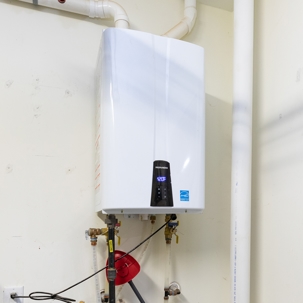
Inside every tankless water heater, water moves through narrow passages in a metal component called a heat exchanger. As the burner fires, that metal heats up and transfers heat to the water flowing through. In Mesa’s hard water, minerals like calcium and magnesium drop out of the water and stick to those internal surfaces. Over time, they form scale, a hard, chalky layer that coats the metal and lines small passages.
As that scale layer grows, it takes more energy to heat the same amount of water, because the minerals act like insulation between the flame and the water. At the same time, those narrow passages start to close up. The unit’s flow sensor, which has to detect a certain amount of water movement before it turns on, may start to struggle. Homeowners notice this as temperature swings, long waits for hot water, or reduced flow at faucets and showers.
Mesa’s climate adds another layer. Many tankless systems are installed outside or in hot garages. Dust and debris can collect around air intakes and vents. High ambient temperatures make electronics and gaskets work harder. Without routine maintenance, small issues like a partially clogged intake or dirty condensate line can turn into error codes, shutdowns, or premature part failures. That is why a tankless system in Mesa that never sees a maintenance visit often ages faster than the same unit in a milder, softer-water region.
How Mesa’s Hard Water Affects Your Tankless System
Hard water means your water supply carries more dissolved minerals, mainly calcium and magnesium. When water is cool and under pressure in the pipes, those minerals stay dissolved. As soon as that same water is heated quickly inside a tankless unit, minerals come out of solution and cling to the first surfaces they touch, which are usually the inside of the heat exchanger and the tight water passages around it.
In a tankless heater, those passages are intentionally narrow. The unit is designed to move a controlled amount of water over a hot metal surface so it can raise the temperature by a specific number of degrees in a very short time. As scale builds on those surfaces, water has less room to flow and more resistance to overcome. The flow sensor may not see enough movement to signal the burner to fire properly. This is one of the reasons you might get lukewarm water, fluctuating temperatures, or intermittent hot water in a hard water home.
That insulating scale layer also forces the burner to work harder to keep up. It is like trying to heat water through a layer of chalk instead of metal. The burner runs longer and hotter to achieve the same outlet temperature, which can shorten the life of components. Scale does not only affect water-side parts. If scale reduces flow and heat transfer, the combustion side can end up operating outside its ideal range more often, which shows up as error codes or noisy operation.
Homes in Mesa without a water softener typically see faster scale buildup than homes with good softening systems. In an untreated home, we commonly find significant deposits inside tankless units after only a few years with no maintenance. In a softened home, the same unit may stay cleaner internally, but it still benefits from periodic checks and flushing to remove any residual buildup and to keep filters, sensors, and drains clear. Tankless maintenance Mesa schedules need to reflect hardness, usage, and how the equipment is installed, not just a generic “every few years” recommendation.
Core Tankless Maintenance Tasks We Recommend in Mesa
When we talk about tankless maintenance, most people think of a simple flush. In reality, a proper maintenance visit in Mesa includes several steps, all aimed at keeping water moving freely, combustion running safely, and sensors reading accurately. Understanding what actually happens during a visit can help you judge whether your system is getting the care it needs.
The most familiar task is descaling or flushing. We connect to the unit’s isolation valves with a pump and hoses and circulate a descaling solution through the water side of the heater. This solution dissolves mineral deposits inside the heat exchanger and internal water passages. After circulating for a set period, we flush the unit thoroughly with clean water to wash out loosened scale and any remaining solution, and we inspect for leaks or drips as the system returns to normal operation.
Descaling is only part of a complete service. We also remove and clean inlet screens or filters that protect the unit from debris in the water supply. On many Mesa installs, those screens catch sand, small particles, or flakes from older galvanized piping. We check air intake and vent terminations for dust, cobwebs, and obstructions, especially on outdoor units that take a beating from our desert environment. Keeping those pathways clear helps the burner get the air it needs and reduces nuisance shutdowns.
Electrical and gas-related checks are another important piece. During a maintenance visit, we look at wiring connections for signs of heat or wear, confirm gas supply pressure while the unit is firing, and listen for abnormal burner or fan noises. We often review error code history stored in the unit as well, which can reveal patterns a homeowner might not have noticed, such as repeated ignition failures or flow-related warnings. All of this information helps catch small issues before they become major repairs.
What a Professional Descale Does for Your System
A lot of homeowners in Mesa hear the term “flush” or “descale” but are not quite sure what happens inside the unit. When we descale a tankless water heater, we are essentially giving its internal water passages a deep clean. The pump pushes the descaling solution through the heat exchanger and narrow passages where scale tends to collect. As the solution circulates, it gradually breaks down the mineral deposits on the metal surfaces and carries them away.
We usually see the results right away. Flow rates can improve, burners can modulate more smoothly, and the unit often runs more quietly. After the descaling cycle, we flush the unit with fresh water until the discharge runs clear and neutral. Then we restore the system to normal plumbing connections, pressurize it, and check for any signs of leakage at valves or unions. This kind of descaling, combined with filter cleaning and system checks, is what gives a tankless maintenance Mesa visit its real value compared to a quick, partial flush.
How Often Do Mesa Homeowners Really Need Tankless Maintenance?
Many people buy a tankless heater because they are told it will need less attention than a tank. That can be true compared to older, rust-prone tanks in some parts of the country, but Mesa’s water changes the equation. Here, waiting several years between service calls often means that by the time someone looks inside the unit, scale has already shortened the life of key components or caused avoidable breakdowns.
For many Mesa homes without a water softener, we generally recommend a full tankless maintenance visit, including descaling, about once a year. This schedule keeps scale from becoming thick and stubborn and keeps filters, sensors, and venting in good shape. In homes with effective water softening and moderate usage, that interval can sometimes extend to around every 18 to 24 months, as long as there are no signs of performance changes or error codes.
Usage and installation matter too. A large family that runs multiple showers, laundry, and dishes every day puts more miles on a tankless unit than a single person who travels frequently. Outdoor units in Mesa’s sun and dust may need more frequent intake and vent inspections than similar units in conditioned spaces. That is why we talk about ranges and patterns, not a single rule that applies to every home.
Keeping track of time and conditions is one of the reasons we built our EZ Flow Maintenance Club. For tankless owners, club membership means we schedule visits around the intervals that make sense for your water, your home, and your usage, without you having to set reminders or guess. It is an easy way to keep tankless maintenance Mesa schedules on track and to turn “I hope it is fine” into “I know it has been checked.”
Signs Your Tankless Unit in Mesa Is Overdue for Service
Most tankless units do not fail overnight without warning. They usually send signals, and in Mesa, those signals often relate to hard water and airflow issues. Knowing what to watch for lets you catch problems early, when a maintenance visit can often restore performance and help avoid part replacements.
One of the most common complaints we hear is inconsistent water temperature. You might notice the shower drifting from hot to lukewarm and back, or the water cuts out briefly when someone else opens a faucet. This can happen when scale and debris restrict flow through the heat exchanger or when the flow sensor struggles to read accurately. The burner may cycle on and off instead of running smoothly, which shows up as temperature swings.
Longer waits for hot water or noticeably reduced water flow at fixtures are other red flags. If your tankless used to deliver strong hot water quickly and now feels sluggish, scale or clogged filters are good suspects. In Mesa’s older homes, small bits of rust or debris from aging pipes can collect in the inlet screen and choke down flow. Clearing that screen and descaling the unit often restores performance dramatically.
Error codes on the display are a more direct sign that maintenance is overdue. Codes related to ignition failures, exhaust issues, or flow problems can point to dirty burners, restricted venting, blocked air intakes, or scale inside the unit. New noises, such as rumbling, whistling, or fan sounds that were not there before, also deserve attention. When you see these symptoms, it is a good time to call a licensed plumber rather than waiting for a full shutdown. We provide same-day service for many Mesa tankless calls, because getting hot water back on track quickly is a priority for most families.
Simple Tankless Care Homeowners Can Do Between Visits
Not every bit of tankless care requires tools or training. There are safe, simple habits you can follow between professional maintenance visits that support your system and help you spot issues early. The key is to stick to low-risk tasks and leave anything involving gas, electrical components, or internal piping to a licensed plumber.
Start by keeping the area around your tankless heater clean and clear. Whether your unit is outside on a wall or in a garage, avoid stacking boxes, yard tools, or storage right up against it. Give vents and air intakes room to breathe. You can gently clear dust and cobwebs from around exterior vent terminations and the general area of the intake with a dry cloth or soft brush. This simple step is especially helpful in Mesa, where dust storms and outdoor debris are common.
Pay attention to patterns, not just one-off events. If you notice that it suddenly takes longer for hot water to reach a particular bathroom, or that you are nudging the shower handle farther toward hot than you used to, make a note. The same goes for any error codes that appear, even if they clear on their own. Sharing that timeline with your plumber helps us target the problem more efficiently when we come out for maintenance.
We do not recommend opening covers, unhooking gas lines, or trying to perform a full descale without training and the right equipment. Tankless units combine gas combustion, high-temperature surfaces, and electronics in tight spaces. Our technicians bring pump kits, isolation connections, descaling solutions, and testing tools to handle that work safely. Club members know that those deeper checks are built into their routine visits, which takes the pressure off of trying to do too much on their own.
How Our EZ Flow Maintenance Club Protects Your Tankless Investment
Once you understand how Mesa’s hard water and climate affect your tankless system, it becomes clear that a loose, “call when it breaks” approach is not ideal. A simple, structured plan works better. That is where our EZ Flow Maintenance Club comes in for tankless owners across Gilbert, Mesa, and the East Valley.
For tankless systems, club membership typically includes scheduled maintenance visits at intervals that match your home’s hardness, usage, and setup. During those visits, we handle descaling, filter cleaning, combustion and vent checks, and the other tasks described in this guide. Members benefit from priority scheduling that moves their calls toward the front of the line and from discounts on needed work, which helps spread costs out and makes planning easier when a larger project comes up.
Because we built the club around proactive care, tankless maintenance becomes a predictable line item instead of a surprise emergency. That approach pairs well with our broader commitments: we provide up-front quotes and free estimates before work starts, back our workmanship with strong warranties and a 100% money-back guarantee, and send neat, uniformed technicians in clearly marked vans who treat your property with respect. Our track record, including multiple East Valley Tribune Best of Awards and BBB accreditation, reflects the trust that homeowners in this area place in us.
Keep Your Tankless Running Strong in Mesa
A tankless water heater is a smart upgrade for many Mesa homes, but only if it is maintained with our local water and weather in mind. A modest amount of regular care, tailored to hard water and high usage, can keep your system delivering the steady, efficient hot water you expected when you invested in it. Instead of waiting for error codes or cold showers to force your hand, you can plan ahead and let maintenance work on your schedule.
If you would like a professional set of eyes on your tankless system or want help setting up a tankless maintenance Mesa schedule that fits your home, our team is ready to step in. We can inspect your current unit, perform a thorough maintenance service, and talk with you about whether our EZ Flow Maintenance Club makes sense for your household. To schedule your visit or request a free estimate, contact EZ Flow Plumbing, LLC today.